The Trade War Mirage: Global Growth Defies Protectionism (For Now)
OECD's Optimistic Outlook
The OECD just released its latest economic forecast, and the headline is this: despite President Trump's ongoing trade wars, they expect the global economy to grow 3.2% this year. That's a slight dip from last year's 3.3%, but a significant bump from their June prediction of 2.9%. The US economy specifically is projected to grow 2%, up from a prior 1.6% forecast.
Unpacking the Discrepancy: Tariffs and AI
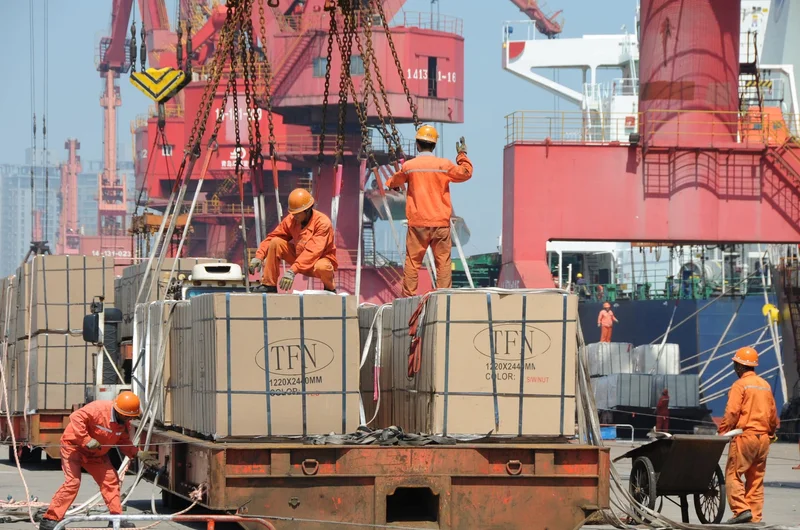
Now, let's unpack this. The narrative has been that Trump's tariffs – his "protectionist wall" – would kneecap growth. But the data suggests otherwise. Why the discrepancy? The OECD points to two factors: tariffs coming in lower than initially feared, and a boost from massive AI investments.
A Gradual Impact: The Slow Burn of Tariffs
It's tempting to declare victory and move on. But that would be premature. Mathias Cormann, the OECD Secretary-General, rightly notes that higher tariffs are expected to "gradually feed through to higher prices, reducing growth." The key word here is "gradually." We're not seeing an immediate collapse, but a slow burn.
Cyber Monday: Spending Up, Orders Flat
The Cyber Monday numbers are also telling, but require some parsing. Adobe Analytics initially reported a 4.5% year-over-year increase in online spending, totaling $9.1 billion as of 6:30 PM EST. They project a final tally between $13.9 billion and $14.2 billion, potentially making it the biggest online shopping day ever. Salesforce, however, paints a slightly different picture. Their data, tracking a range of retailers, showed global online sales up 5.3% to $17.3 billion as of noon EST, but with online orders unchanged from last year. U.S. online sales were up a mere 2.6%, with orders down 1%.
Deciphering the Data: Methodology Matters
Which data is "correct"? Both, probably. The difference likely lies in the sample sets and methodologies. Adobe focuses on online spending, while Salesforce includes a broader range of retailers, including grocers. (I've looked at enough of these reports to know that the devil is always in the methodology footnotes.)
Higher Prices, Less Buying Power
The crucial point is this: spending is up, but order volume is flat or declining. This suggests that higher prices, driven in part by tariffs, are inflating the sales figures. Consumers are spending more, but potentially buying less. They're spreading out purchases over multiple promotional days, hoping to maximize discounts.
Cracks Beneath the Surface: A Volatile Consumer Landscape
Wall Street's Nuances: Winners and Losers
Wall Street is holding steady, with the S&P 500 up 0.1% and the Dow up 0.2%. But even here, the data reveals a more nuanced picture. MongoDB soared 23.4% after a strong quarter, while Signet Jewelers (a classic discretionary spending indicator) dropped 4% due to a weak holiday forecast. Wall Street holds steadier as bond yields and bitcoin stabilize
Procter & Gamble's "Volatile" Consumer
And this is the part of the report that I find genuinely puzzling. Procter & Gamble's CFO describes the U.S. consumer landscape as "volatile," despite the company meeting expectations. What does "volatile" mean in this context? It suggests a high degree of uncertainty and sensitivity to economic shocks.
The Widening Economic Divide
The article hints at the answer: a widening gap between the haves and have-nots. Lower-income households are struggling with inflation, while richer households are benefiting from the booming stock market. This creates a bifurcated economy, where aggregate numbers mask significant disparities.
Labor Market Complexities
Vanguard's analysis of the labor market adds another layer of complexity. Hiring is slowing, but the unemployment rate remains stable due to weaker immigration and increased retirements. This means that the labor market is tighter than the headline numbers suggest, potentially putting upward pressure on wages and prices.
The Calm Before the Storm?
So, what's the real takeaway? The global economy is proving more resilient than expected, but the long-term effects of Trump's trade wars are still uncertain. The Cyber Monday data suggests that consumers are feeling the pinch of higher prices, and the bifurcated economy is creating winners and losers.
A Potential Slowdown Down the Road
The OECD's revised forecast is a snapshot in time, not a guarantee of future performance. The "gradual" impact of tariffs, the "volatile" consumer landscape, and the complexities of the labor market all point to a potential slowdown down the road. We're not seeing a cliff, but a series of cracks appearing beneath the surface.
The Data's Whispering a Warning
The initial narrative of immediate economic doom from the trade war was clearly wrong. But the data now suggests a more subtle, insidious effect: a slow erosion of consumer purchasing power and a growing economic divide. The question isn't whether the trade war will immediately tank the economy, but whether it will exacerbate existing vulnerabilities and make us more susceptible to future shocks. And that's a question the OECD report, for all its optimism, doesn't fully answer.